
That Icon!
A small framed picture takes a trip to church

Last Sunday I took a small framed picture to church.
The picture, approximately 23cm x 18cm, is a replication of the central image of a large fresco painted high on the wall of the Byzantine era Chora Church (now Kariye Mosque) in Istanbul. The building dates back to the 4th Century AD. The famous fresco has been reproduced in many styles and sizes from frescos to small icons and it is especially loved in the Eastern Orthodox Church.
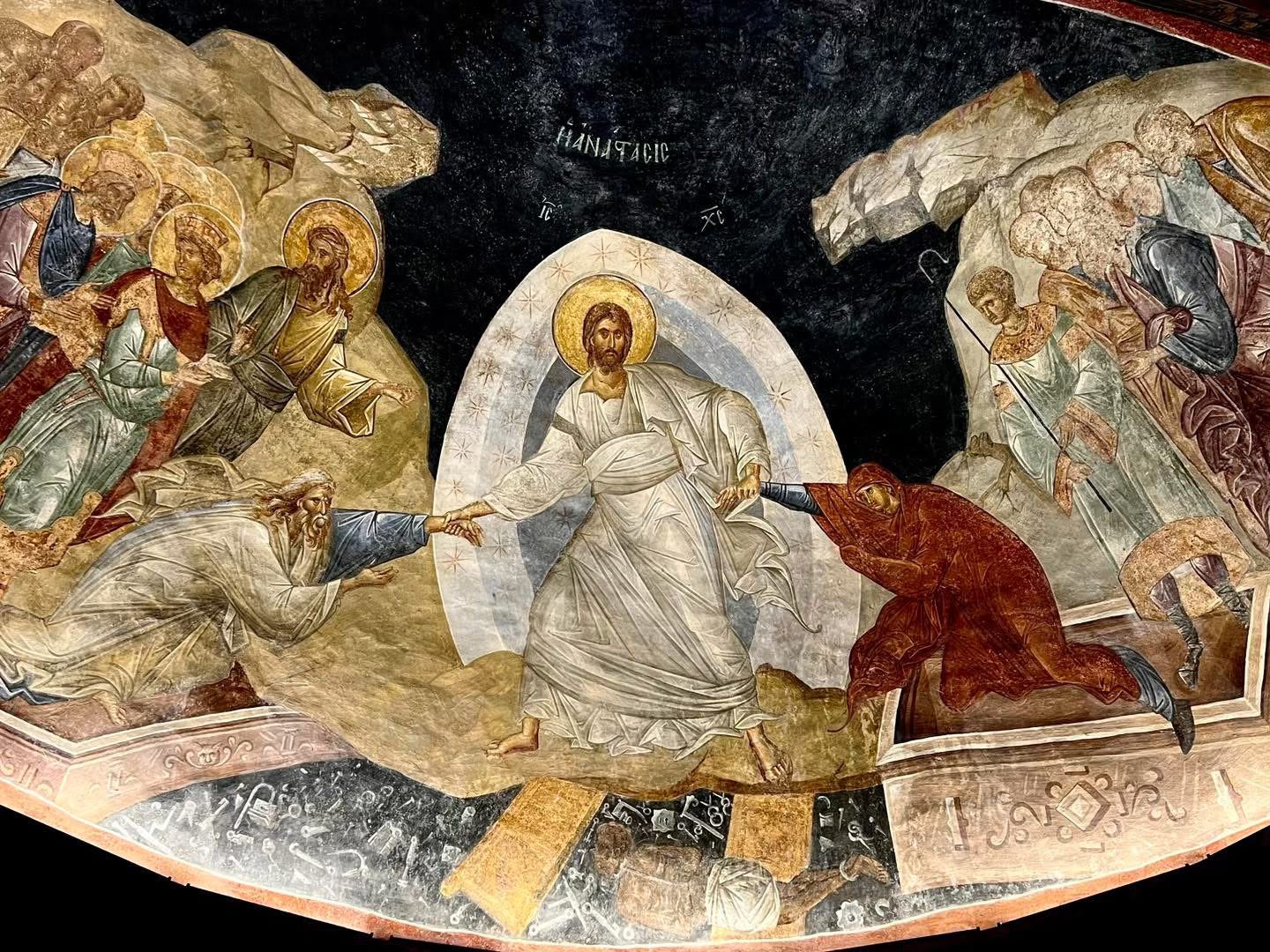
My small picture was reproduced by me at a photo print shop, and framed in a beautiful old frame that I found in an opportunity shop and touched up to give it a dark blue hue. Throughout the season of Lent and Easter it sits on a lighted shelf in our home.
The ancient fresco and all it's various replications is known by a single word in the Greek language - Anastasis (in English: resurrection).
Last Sunday was Easter Sunday, the day Christians celebrate the resurrection of Jesus from the dead. Anastasis came to church with me on Resurrection Sunday morning because I'd been invited to share good news, and the small photographic reproduction of this ancient Orthodox icon inside it's recycled frame would help me do just that.
Icon Art
We have a small collection of icon art each depicting a transcendent moment in the revelation of God to mankind, and Suzanne and I place them on our lighted shelf, in turn, according to the calendar.
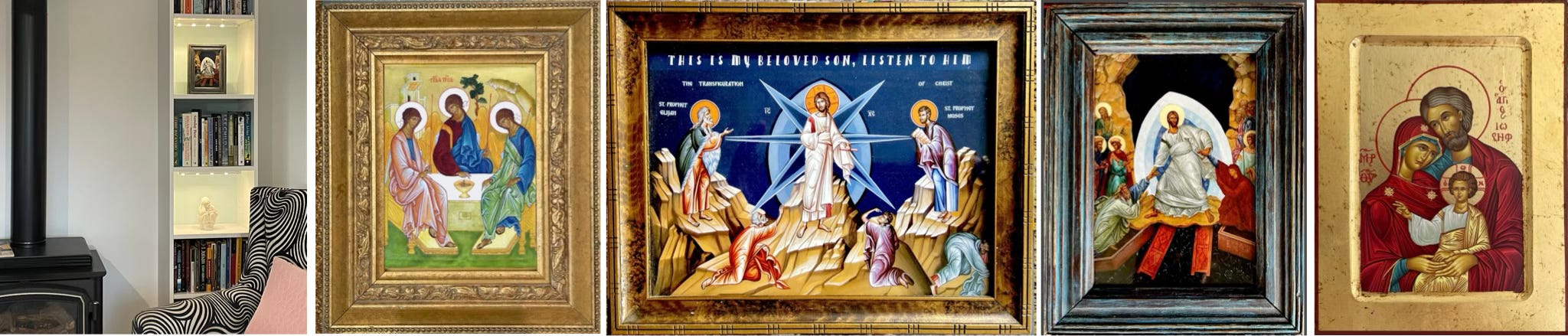
Today a person can read or study a book or any of multiple Bible translations; they can watch or listen to teaching on You Tube; and not so long ago one might buy a cassette or CD recording and be awed by the telling of a gospel story. But before people could do any of those things, and where illiteracy was widespread, an Icon would transport a person instantly into a story and have their soul enriched by its truths.
I can be doing any number of things in our home and my eyes might fall upon an icon. Without ceasing my activity, or perhaps purposely pausing, the message in a picture can fill me up - maybe just a moment of contemplation. A picture really can be worth a thousand words.
Anastasis
As I show Anastasis to the church, I point to the broken doors upon which Christ stands - these are the shattered doors to Sheol (the abode of the dead) that flew off their hinges when through death he descended to the dead. Scattered beneath these doors are the locks and other hardware that were also sent flying.
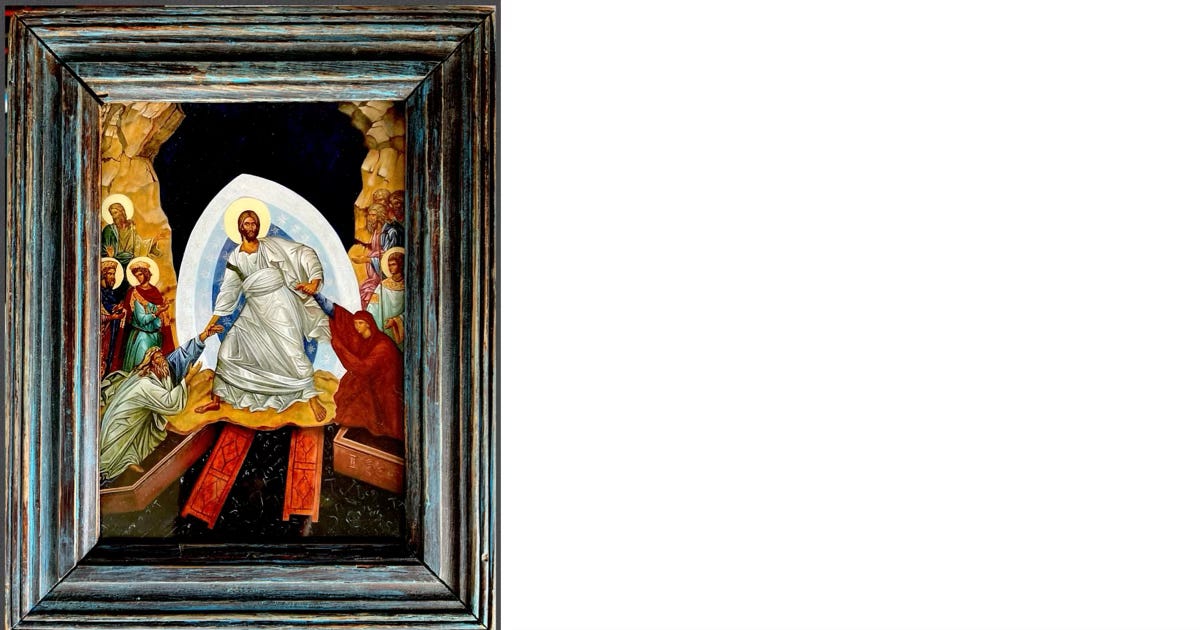
I show my listeners how Christ holds an old man and an old woman by the hand and is pulling them up from below. I explain how the ancient believers knew those to be old Adam and Eve, the father and mother of the human race representing the whole human family.
Behind Christ the blue of the heavens opens to the ascending Christ as, according to St Paul, he leads the captives who are now his captives far above all the heavens. Christ's fluttering robes depicting this movement.
“Therefore it is said, “When he ascended on high, he made captivity itself a captive; he gave gifts to his people.”
"(When it says, “He ascended,” what does it mean but that he had also descended into the lower parts of the earth? He who descended is the same one who ascended far above all the heavens, so that he might fill all things.)" Ephesians 4:8-10
A new church
The descent of Christ shouldn't have been a surprise to me, but it was, a dramatic surprise! For decades I had it off pat ... Jesus was crucified, died and was buried; and on the third day he rose again; he ascended into heaven, and is seated at the right hand of the Father.
However, six years ago Suzanne and I moved city to be closer to our children and grandkids, and in joining a new church, we began confessing the Apostle's Creed every Sunday we were able to be there ... just as believers had be doing since the fifth century.
And there it was ... that dramatic surprise, for after confessing Jesus Christ had been "crucified, died and was buried", and before we confessed that "on the third day he rose again", we confessed together "he descended to the dead".
It should never have been a surprise to me. I'd read many times the words of Jesus when he said, "as Jonah was three days and three nights in the belly of a huge fish; so the Son of man will be three days and three nights in the heart of the earth." (Matthew 12:40)
None of my teachers had asked, what was Jesus doing during that time? I simply assumed all Jesus meant was he'd be lying dead in Joseph of Arimathea's tomb - nothing more. No one had dared connect the dots and land on Peter's revelation that Christ "was put to death in the flesh, but made alive in the spirit, in which also he went and made a proclamation to the spirits in prison" (1 Peter 3:19).
No surprise to them
But the early Orthodox fathers and mothers did. It was no surprise to them.
Saint Epiphanius, the fourth-century bishop of Cyprus, wrote about Christ's descent: His body was truly buried and for three days remained without soul, breathless, motionless; it was wrapped in a shroud, put in a grave, covered by a stone and sealed. His divinity, however, was neither sealed nor buried. Together with his holy soul it descended into the nether world and liberated captive souls from there; it destroyed the sting of death, demolished bars and locks of steel.
John Chrysostom may have once preached in the Chora Church during the fourth century. "Christ by his death bound the chief of robbers and the jailer, that is, the devil and death, and transferred his treasures, that is, the entire human race, to the royal treasury?"
In a Holy Saturday hymn, Saint Basil praises the cross and mocks hell in these poetic words:
Today hell groans and cries aloud:
"My power has been destroyed, I accepted a mortal man as one of the dead; yet I cannot keep Him prisoner, and with Him I shall lose all those whom I ruled. I held in my power the dead from all ages; but see, He has raised them all."
Glory to your Cross, O Lord, and to Your Resurrection."
Their fresco painters knew, the conquering Christ's descent was no surprise to them, and they gave us Anastasis!
Last Sunday she accompanied me to church in all her outrageous splendour, for I had good news to share!
Sounds like it would have been a great kōrero David. Thanks for sharing it here 😊
I was watching some short videos from Holy Saturday services in Orthodox churches the other day. It was loaded with joy! Music, throwing bay leaves (sometimes they use rose petals) over the congregation... just full-on joy. It's their response to this very thing.